Geoinvestigate filming in Walsall for Channel 5’s new blockbuster Sinkholes & Mine Shafts TV series
Local geologists and geotechnical site investigation specialists Geoinvestigate Limited with offices in the West Midlands serving Walsall, Dudley, Wednesbury & Wolverhampton with CMRA, mine risk assessment and coal mine drilling services have been filming a new series on sinkholes and mine shaft hazards with Boomerang TV productions of Cardiff.
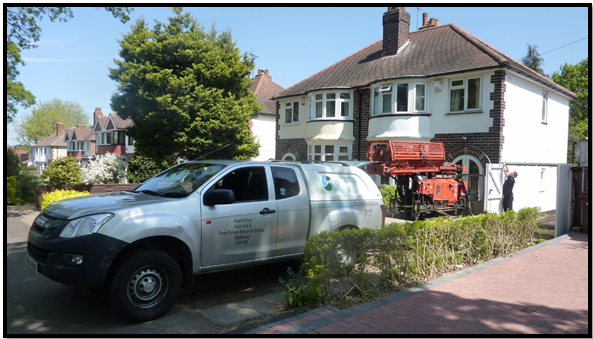
The new series for Channel 5 to be aired later in the year follows on from last year’s highly successful Channel 5 sinkholes and mineshafts series which also featured Geoinvestigate’s site investigation work with sinkholes.
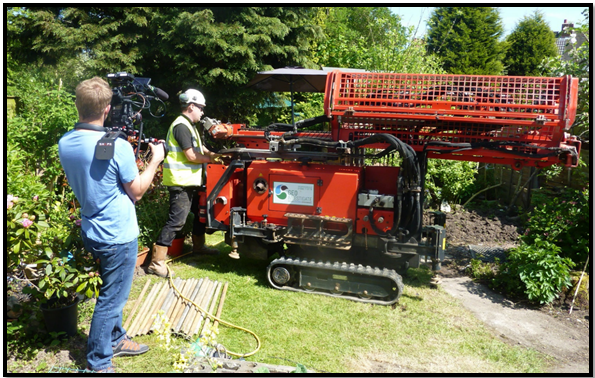
This week Geoinvestigate’s team have been in the Delves area of Walsall investigating a sinkhole which recently appeared at the side of an old ironstone mine shaft and threatened the safety of a house next to it.
The homeowners had no idea they had a mine shaft under their house until a small hole appeared when they were pulling onions from their vegetable patch.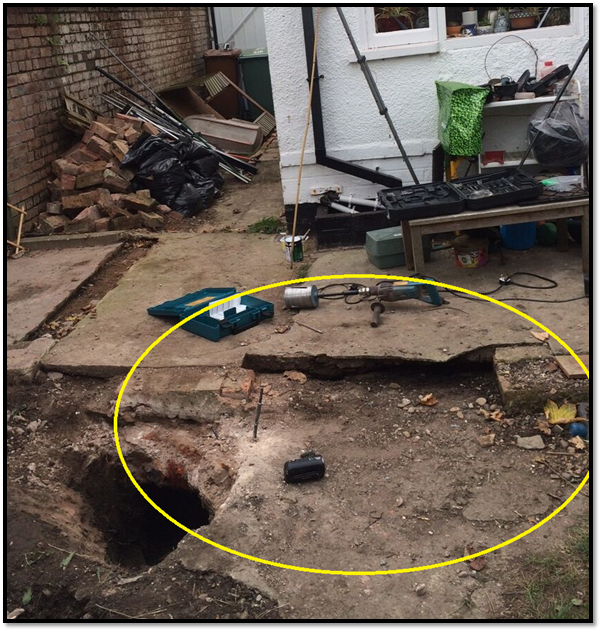
As the hole got larger and larger in the days that followed the family became increasingly worried, first suspecting that it might be a large water well or that the collapse had been caused by a broken sewer. Eventually the couple’s son contacted Geoinvestigate’s Sinkhole and Mineshaft Helpline for advice and was told that the feature not a well but probably an ironstone shaft dating back to before 1886 and perhaps much older.
The shaft is first identified as a disused “old shaft” on an Ordnance Survey map of 1886 later disappearing from the map record altogether by 1903. Geoinvestigate’s Managing Director and principal geotechnical engineer Ross Nicolson said “there are those who criticise the accuracy of these early maps and question whether the mine shafts shown on them really exist because the maps are old”.
“Let’s just remind ourselves that in 1886 when this shaft was first recorded on a map this country’s surveyors and map makers were the envy of the world. In the same year they were involved in building one of the engineering marvels of the modern world – the Forth Railway Bridge completed in 1889”.
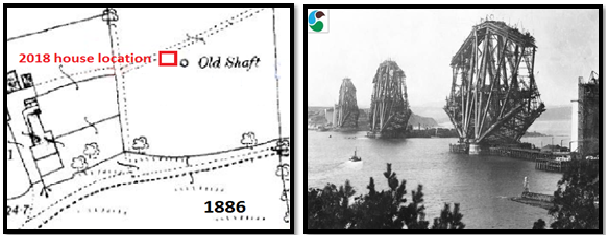
They were also mapping an empire covering ¼ of the world’s lands”.
“More often than not we have found these older maps to be accurate. Even today after 35 years in the business and with all the recent advances in satellite and GPS mapping the accuracy of these early maps still astounds me” said Mr Nicolson. “So in my experience if an old map shows a mine shaft it’s usually out there somewhere, the difficult part is finding it quickly. However occasionally there are discrepancies in the map record but still you would have to be foolhardy to ignore an old map showing a mine shaft unless you had very good reason to do so. That’s why the Coal Authority are very reluctant to remove a mine shaft from its record even if it cannot be located by recent site investigation”.
Mr Nicolson said of the Delves mine shaft investigation “this is one of the most interesting jobs our team has worked on. Our initial background desk study search and last weeks drilling investigations in Walsall have discovered some really interesting information about the history and construction of this mine which will be revealed in the next TV series”.
Ironstone mining in the Delves area pre-dates the Norman Conquest of 1066 though the date of this shaft is likely to be much later perhaps late 1700s or early to mid 1800s. Mining may even stretch as far back as Roman times in the Walsall area.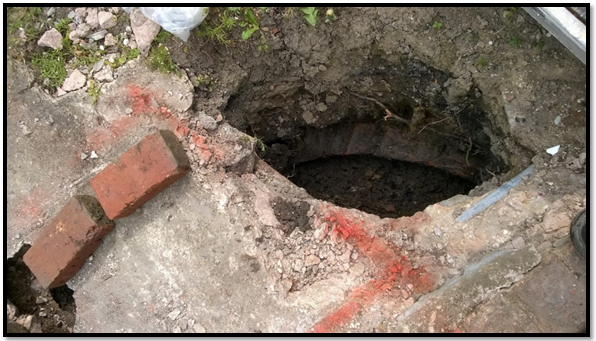
The Delves shaft has a brick lining which is unusual because they are expensive to construct. The jury is still out on whether the shaft was a fully operational mine or a trial exploration shaft rather than a production shaft similar to a very large borehole sunk to provide information on the presence of ironstone and perhaps coal. Originally the shaft winding gear may have been powered by a crude horse gin with men, women and even children descending into the dark in an open, unguarded bucket.
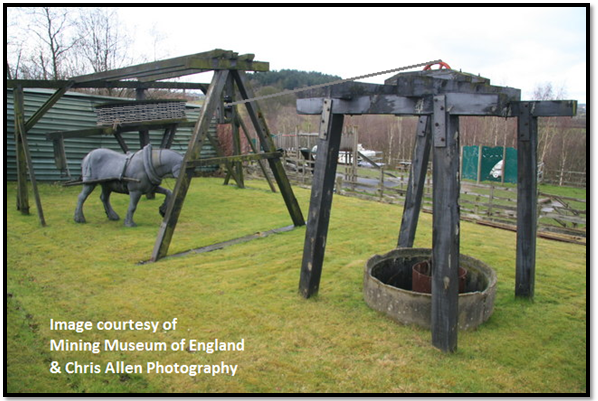
The evidence suggests that when the house was built in 1935 the builders found the shaft perhaps filling it up then, after which it was crudely capped with a concrete plug reinforced with small steel pipes before re-burying it in the back garden. Though it is clear the builders new the mine shaft was a hazard it appears that they didn’t tell the house buyers in 1935. Astonishingly the original building firm is still in existence in the Midlands today and is listed on the London Stock Exchange.
Mr Nicolson explained that having a mine shaft like this one on a property can turn out to be a nightmare for both house sellers and prospective buyers. Though mine shaft collapse is very rare the presence of a mine shaft can devalue a property by up to 30% depending on how close it is to a building and whether or not it’s been treated and stabilised. Owners with properties impacted by mine shafts may not be able to sell at auction even with a substantial price reduction and increasingly in recent years buyers are being turned away by mortgage lenders who will no longer accept even minimal levels of mine shaft risk. Often a house sale will fall through at the very last minute without the seller realising or being told that it was because of mine shaft hazard or MSH.
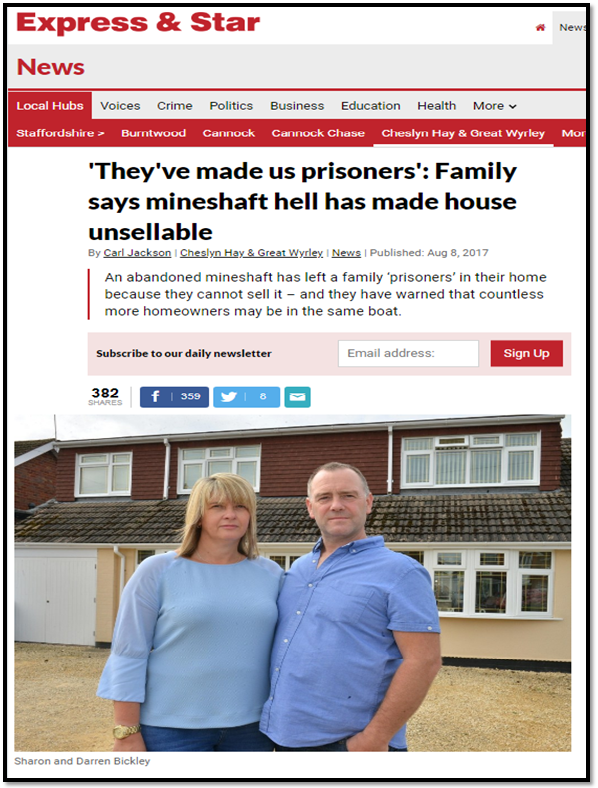
In their 8th August 2017 article The Express & Star highlighted the plight of a local couple affected by coal mineshaft hazard and their “living nightmare and hell” caused by the presence of a mine shaft not in this instance beneath their property but beneath their neighbour’s adjoining semi-detached house. Soon after the article aired Geoinvestigate were contacted by BBC’s Rip-Off Britain and Channel 5 who were both interested in covering the issue. Mr Nicolson said he had no doubt that the Express & Star’s initial exposé had “lit the touch paper” and triggered these subsequent TV investigations and the newspaper is to be highly commended for taking the lead on this topic which not only affects the Walsall & the West Midlands but the whole country.
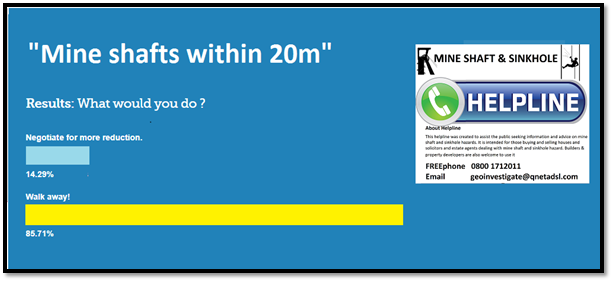
In a recent survey conducted by Money Saving Expert 85% of house buyers said they would walk away from properties within 20m of a mine shaft while 15% said they would try to renegotiate a price reduction.
There is no winner in this situation because as it stands the property remains blighted by mine shaft hazard. Mr Nicolson said many 1000s of homes in the UK are either built over mine shafts or have mine shafts in their gardens or nearby. Even properties which do not have mine shafts within their property boundaries but where there is one next door or in the street nearby can be affected. Mr Nicolson said the first time a homeowner may find out that they have a mine shaft under or near their property is when they try to sell their and the mine entry is found by a mining search.
Mr Nicolson remembers one notable call his company’s mineshaft and sinkhole HELPLINE received late on a Friday evening. The caller from the Midlands said “im looking at the Coal Authority record online at the minute and I can see a RED CROSS (X) mine shaft symbol under my house.

Is that possible!” My response was yes but statistically the risk of collapse is very small though perhaps tomorrow you should check the property for signs of movement including cracking walls, badly fitting or sticking doors, sagging lawn, patio, driveway and ponding surface water and if you are still concerned call out the Coal Authority inspector. The Coal Authority provide a free inspection service on the former coal mining areas – however they are not responsible for other types of mine working such as ironstone, chalk, lead or tin etc so there’s no point in calling them out if you are not on a former coalfield.
While the Coal Authority did respond to a call out to inspect the Delves mine shaft problem because the shaft turned out to be ironstone mine and not a coal mine they told the owners that regrettably they could not get involved. To their credit however the CA did erect safety fencing around the shaft which they later gifted to the family. The buildings or structural defects insurer wasn’t so helpful not even bothering to visit the property because the owners in response to the insurers question – “has the mine shaft caused cracking to the house?” replied “No, not yet!”
Structural defects insurance doesn’t kick-in until mining subsidence causes actual physical damage to bricks and mortar and usually on the main house is covered. Mr Nicolson said homeowners should remember that only the main house is covered and not swimming pools, patios, driveways and garden areas though additional insurance can be taken out to extend cover to some items. So if a mine shaft or sinkhole suddenly appears in your garden one day and it’s not coal then you the homeowner and not your insurer are responsible for investigating and repairing it. If you find out you have a coal mine shaft on your property and you want the Coal Authority to find it and make sure it’s safe – think again! While the Authority may send out an inspector for free if their report that follows says “NO PROBLEM” (yet!) they won’t do anything further until something physically happens such as progressive or slow subsidence or a sudden collapse event because only when this happens are they legally required to “step-up to the plate” – take charge, investigate and fix the problem.
One desperate homeowner at the end of her tether unable to sell her house told Geoinvestigate – “god forgive me I’ve got young kids but sometimes I wish that coal shaft beneath my property would collapse forcing the Coal Authority to step in, fix problem and remove this hellish nightmare that my family has been living with for 3 years now – at least then we’d have closure, sell the property and move on!”
Returning to the Friday night sinkhole and mineshaft HELPLINE caller. The caller then went on to explain that they were renting the house and that their landlord hadn’t told them about the mine shaft and if he had they would have looked elsewhere for a safer property to rent. Mr Nicolson said that he was aware that some properties with mine shaft hazard that had previously at been sold at knock down price at auction can re-enter the “buy to let” rental market without any work having been carried out on them either to investigate the mine shaft or treat and stabilise it. In his opinion this was completely unacceptable. Tenants have the right to be made aware of the presence of a mine shaft and given the option of walking away – after all prospective buyers can walk away if they receive an adverse surveyors or property search report so why should it be different for tenants. Mr Nicolson said the law should be changed to place the onus on landlords to disclose the proximity of mine shaft hazard. In the US, Florida law is currently being revised to make it mandatory for landlords to disclose sinkhole hazard to their tenants even if when a sinkhole has been previously investigated, treated and stabilised. So why should it be different here in the UK with regard to mine shaft and sinkhole hazard?
Mr Nicolson went on to explain that the mine shaft in Walsall was being investigated with a new type very safe high speed sinkhole and mine shaft probing machine called Microdrill that had been specially designed for Geoinvestigate exactly for this line of work and it had proven a winner both on this job and on many jobs before it. He explained Microdrill is a very safe way to investigate mine workings because it makes a very small hole and uses very small quantities of water to drill with. For safety drilling with water is mandatory in the UK when drilling through coal mine workings and where the public and occupied buildings are present nearby.
Before starting the site investigation Geoinvestigate developed a conceptual model of what the Delves mine shaft might look like beneath the ground surface and which would help them to target boreholes.
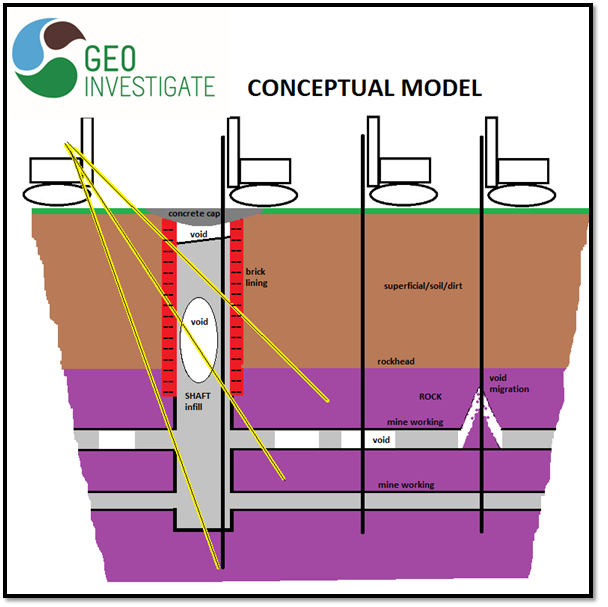
Boreholes were then sunk through the shaft to establish shaft depth and the nature of the infill and whether large voids/cavities were present which might give rise to a collapse and sinkhole formation. During drilling over the shaft the surface was covered by a safety platform. Boreholes were also sunk in the garden to locate the ironstone seams and possible horizontal mine workings connecting with the shaft. All the time Boomerang Productions were filming Geoinvestigate’s drilling and site investigation operations for Channel 5. As a final check an inclined hole was drilled at 60 degrees through the full width of the shaft from side to side to check for large voids..
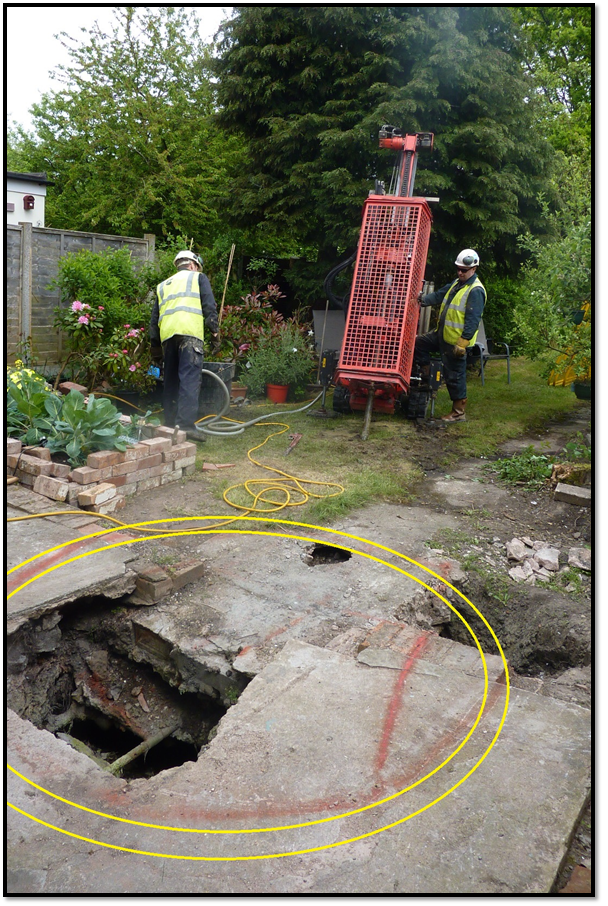
Mr Nicolson said with the information we get from drilling we can design the most appropriate and least expensive solution to stabilise the shaft. In this instance fixing the problem will probably require topping up the shaft with stone fill, strengthening the infill by grouting or chemical treatment and finally providing a new steel re-inforced concrete cap at surface.
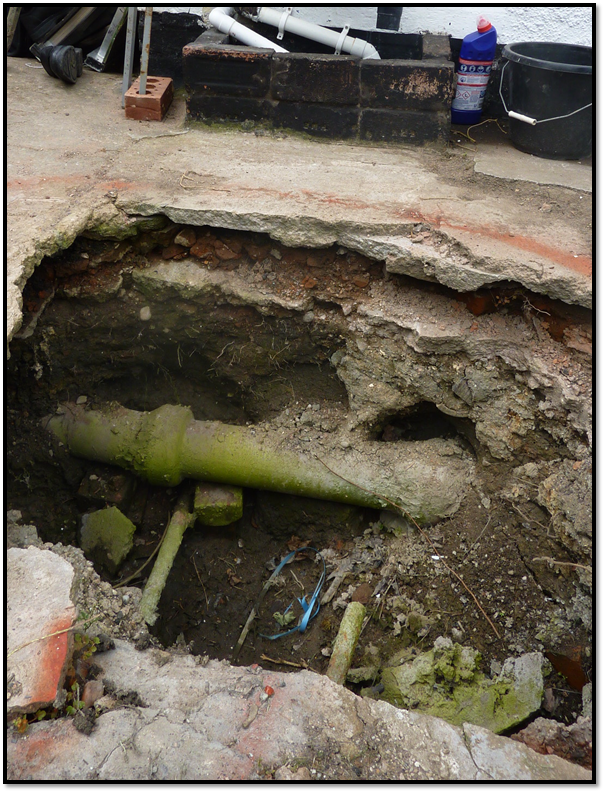
Severn Trent Water have already inspected the short length of shallow domestic sewer pipe which cuts across the top of the shafts brick lining. Their site representative said that the pipe is not leaking but they will replace the old clay pipe with new PVC pipe out of their own pocket before it’s finally covered over by new concrete. “Well done Severn Trent!”
Moving on Mr Nicolson said “things are going to change a lot in the aftermath of the recent major mining subsidence calamity at Bayfield Estate, West Allotment near Newcastle. Coal mine working subsidence at this new housing estate has affected 35 new houses so far and has resulted in 19 total demolitions running into millions of loss. Following the incident The Coal Authority have put it on record that they want coal mining site investigation consultants like Geoinvestigate to provide more site investigation information on old mine workings to avoid a similar catastrophe in the future.
Undoubtedly this will lead to more and more boreholes being sunk which Geoinvestigate is well placed to do with our new state of the art, safe, high speed Mineshaft and Sinkhole Microdrill. Mr Nicolson said “we expect to see more orders for our drilling services through our Birmingham, Bristol, Nottingham, Newcastle, Leeds and Manchester site investigation offices which specialise in CMRA coal mining risk and coal and other mine investigation and drilling. We have already seen a marked increase in business this year in Barnsley, Sheffield, Doncaster, Rotherham and Chesterfield and we expect this to continue. Dudley, Walsall, Wolverhampton and Wednesbury in the Midlands are also showing promising increases in mine risk activity. We even get the odd coal mine drilling investigation in Glasgow, Hamilton, Ayr, Edinburgh and Fife.
Geoinvestigate provide CMRA’s, mine risk reports and coal mine drilling services the latter meeting the expectation of sources such as Lyons CMC who say that typically 75% of CMRAs will require further intrusive investigation. Recently Geoinvestigate Microdrill was recommended by Barnsley and Doncaster Council’s South Yorkshire Mining Advisory Service or SYMAS geotechnology and mining searches.
Mr Nicolson said that because of the success of both new Microdrills coal mine drilling capability and the company’s growing mining risk assessment and CMRA services we our expanding our business activities in the West Midlands. Because of this growth we are currently looking to recruit experienced engineering geologists and geotechnical engineers from the region familiar with mine risk assessment and CMRA.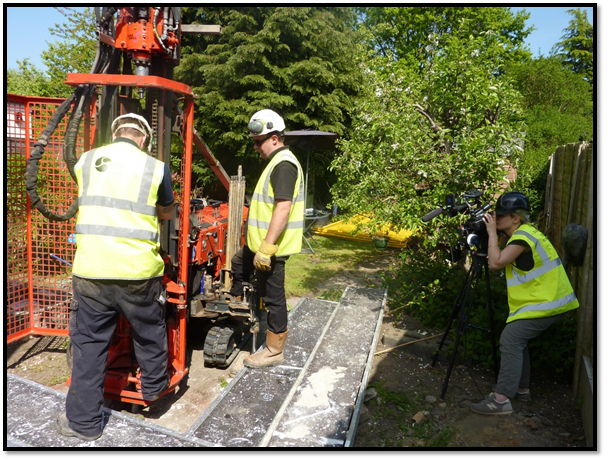
Filming for the series is continuing and Geoinvestigate still expect further involvement in the weeks that follow. The series is due to be aired on Channel 5 later this year and there is even talk of worldwide syndication.
If you live in the West Midlands or in the Walsall, Wednesbury, Dudley or Wolverhampton areas and you are concerned about sinkhole or mineshaft hazard don’t hesitate to contact Geoinvestigate Sinkhole & Mine Shaft HELPLINE where you talk to one of our experts. Or simply email us – we are here to help you!
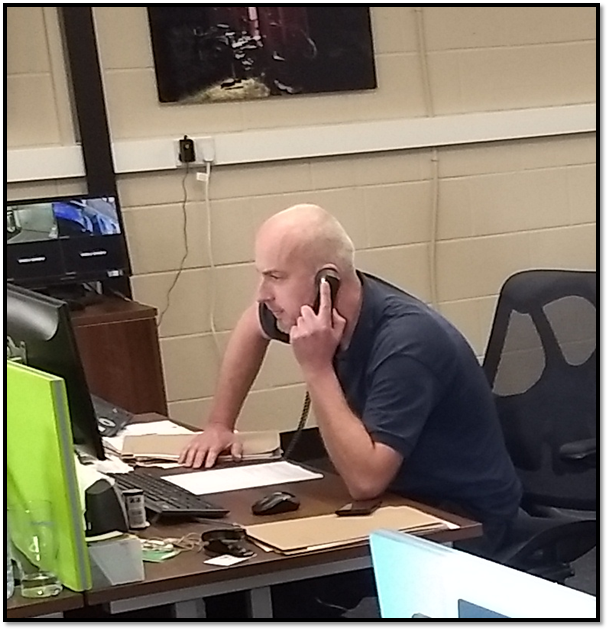
One of Geoinvestigate’s team responding to an enquiry about our CMRA, coal mine risk assessment and coal drilling services covering Newcastle and Durham from our North East, Newcastle and Middlesbrough Offices.